
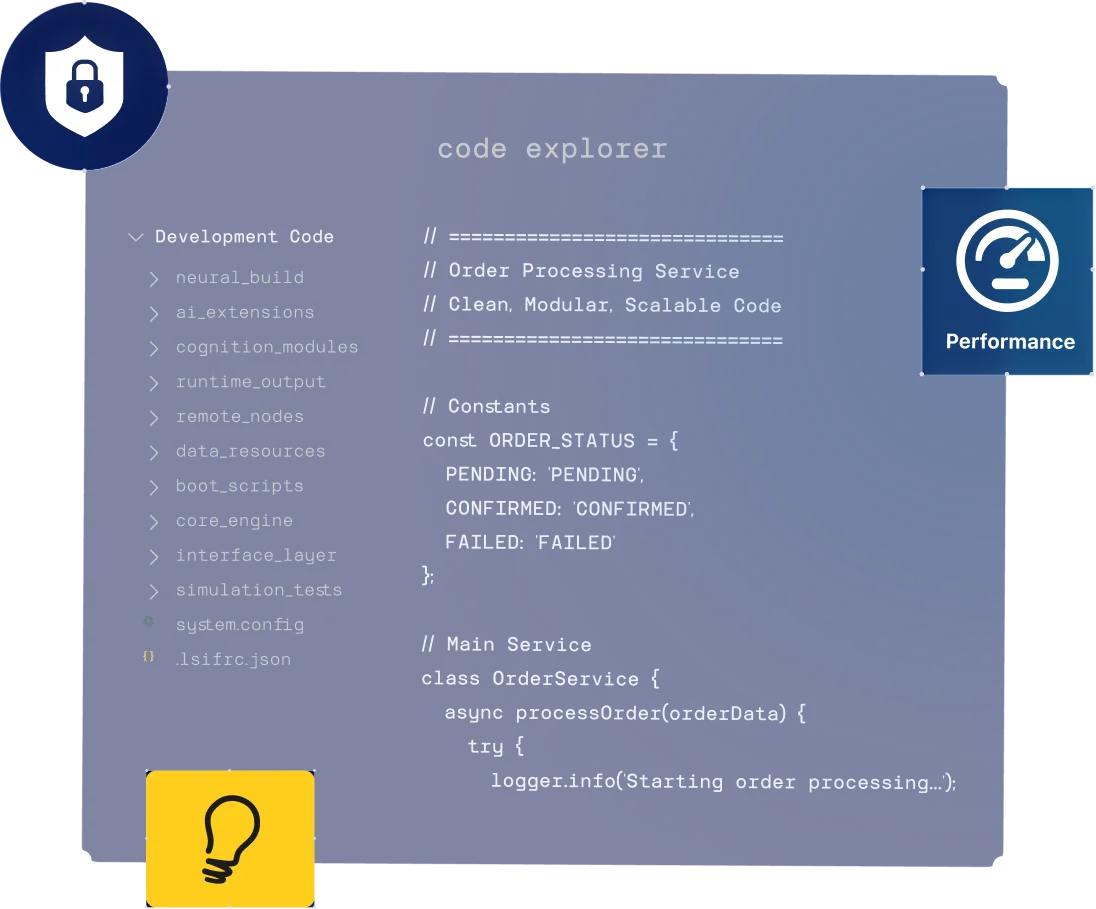
Outdated or messy code hinders growth, increases risk, and makes every update harder than it should be. At Idea Maker, our software refactoring services transform messy, legacy code into clean, reliable, and secure systems that are easy to maintain without changing existing functionality. We reduce technical debt, improve system stability to make future updates faster and more cost-effective.
Book Your Free Consultation Today!







Implies full-stack, end-to-end capabilities, not just simple apps
At Idea Maker, we offer a comprehensive suite of application refactoring services designed to streamline and modernize your software. We carefully restructure complex systems, simplify interdependent modules, and improve internal workflows. Our approach ensures your code is easier to understand, safer to update, and ready to support new features and future growth.
Identify hidden inefficiencies and technical debt before it slows growth. Book Your Free Consultation Today!
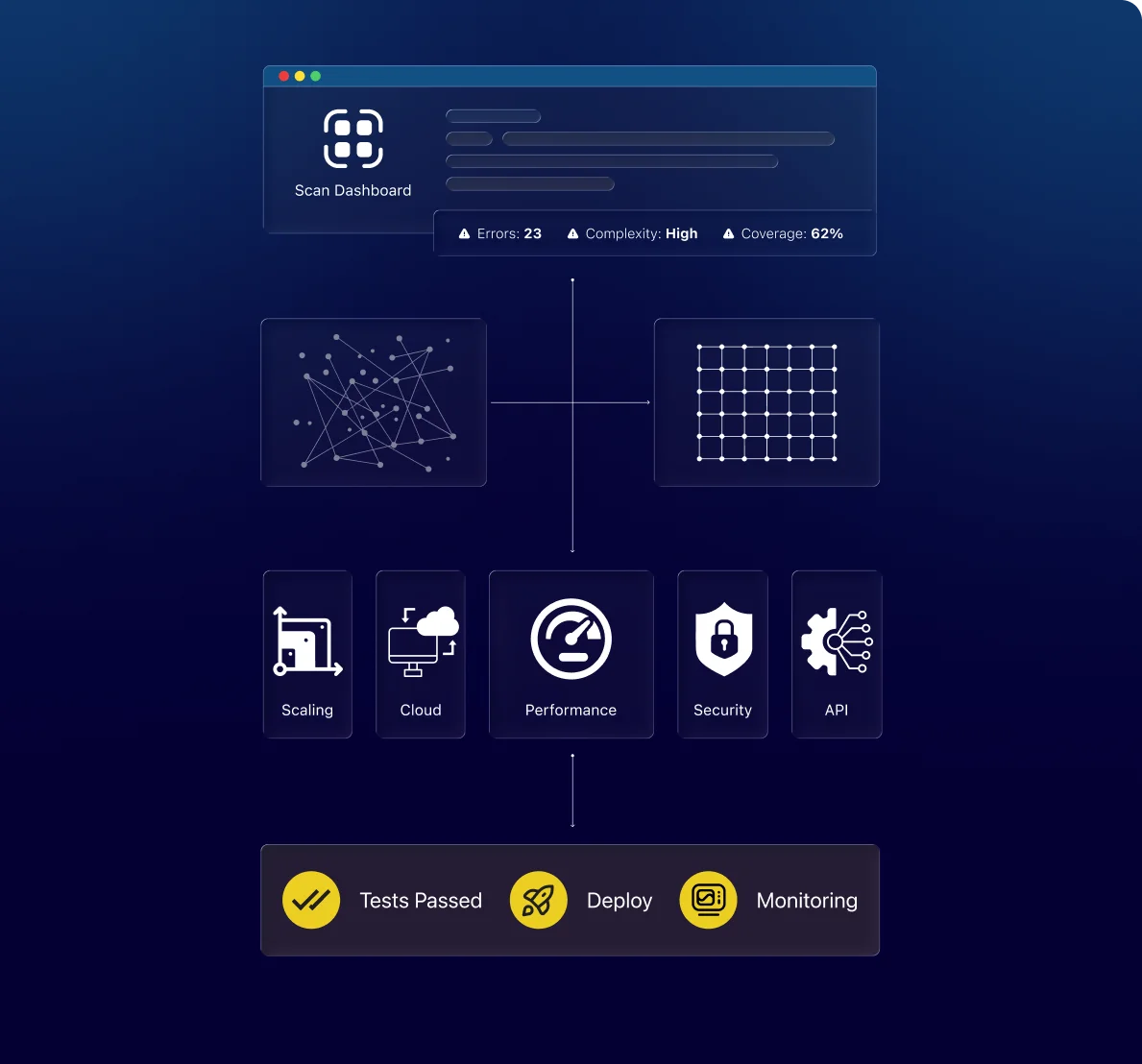
At Idea Maker, our software refactoring services offer a comprehensive assessment of your software system, including how your code is organized, maintained, and extended. We leverage manual and automated processes to review the structure, key modules, integrations, and documentation to identify inefficiencies, redundant logic, security vulnerabilities, and bugs.
Our team delivers a detailed code audit report, a dependency and integration map, a list of high-priority technical debt areas, and clear recommendations for restructuring. This hands-on review gives your team a transparent view of fragile components and sets a structured roadmap for all subsequent refactoring and optimization work.
Our code refactoring services offer cleaning and reorganizing existing code without changing what your software does, using various refactoring tools. That means simplifying logic, breaking down oversized files, standardizing naming, and removing duplicated or unnecessary sections that make future changes harder than they should be.
Our goal is to make your system easier to understand and manage. We work module by module, improving structure and clarity while keeping the system stable, often using AI code refactoring. Every change is intentional, documented, and aligned with how your internal team will maintain the code moving forward.
Many businesses rely on systems built years ago that still work but are increasingly difficult to maintain. Our legacy modernization services are designed to carefully update these systems by replacing outdated components, restructuring older modules, and aligning them with current development standards.
We don’t rebuild everything from scratch. Instead, we leverage AI code refactoring and various refactoring tools to modernize in controlled phases with minimal downtime and cost. When refactoring code, our engineers preserve core business logic while improving structure, compatibility, and maintainability behind the scenes.
Technical debt is the consequence of putting speedy delivery ahead of optimal code quality. Our application refactoring services offer addressing accumulated technical debt by identifying shortcuts, unused libraries, inconsistent patterns, and temporary fixes embedded within the code.
From there, our engineers replace fragile solutions with clean, maintainable implementations that stay cost-effective. We also introduce clearer coding standards and documentation practices so the system remains structured long after the refactoring work is complete.
Our application refactoring services also offer a comprehensive, ongoing process of identifying, mitigating, and preventing vulnerabilities while enhancing the performance and reliability of software applications throughout their lifecycle.
We review how your application handles authentication, permissions, data validation, and system configurations. Our goal is to ensure that core safeguards are clearly implemented and consistently applied across the codebase.
Our application refactoring services offer refining software, databases, and infrastructure for maximum performance and scalability to handle increasing loads without crashing or slowing down. This service bridges the gap between current system capabilities and future demand and usually involves a blend of auditing, code refactoring, infrastructure adjustments, and continuous monitoring.
We examine how your application processes data, manages requests, and interacts with databases or external services to identify and mitigate inefficiencies, heavy queries, and resource bottlenecks that impact responsiveness.
As a leading software development company, we audit, streamline, and optimize your organization’s portfolio of APIs and software integrations. We review how your system connects with other services and simplify the way data moves between them to achieve maximum speed, security, and real-time data exchange.
Our code refactoring services offer reorganizing API logic, improving documentation, and removing redundant integration layers. We enforce consistent security policies (e.g., OAuth 2.0), documentation, and API design standards (e.g., RESTful, GraphQL) across the organization.
Our refactoring service involves the planning, design, implementation, and optimization of automated pipelines so that updates move smoothly from development to production. Our team reviews build processes, environment configurations, and release procedures for consistency and reliability.
Where needed, we standardize deployment steps, define clearer release procedures, and reduce inconsistencies between environments. Our goal is to create a cleaner, reliable, and secure path for ongoing updates.
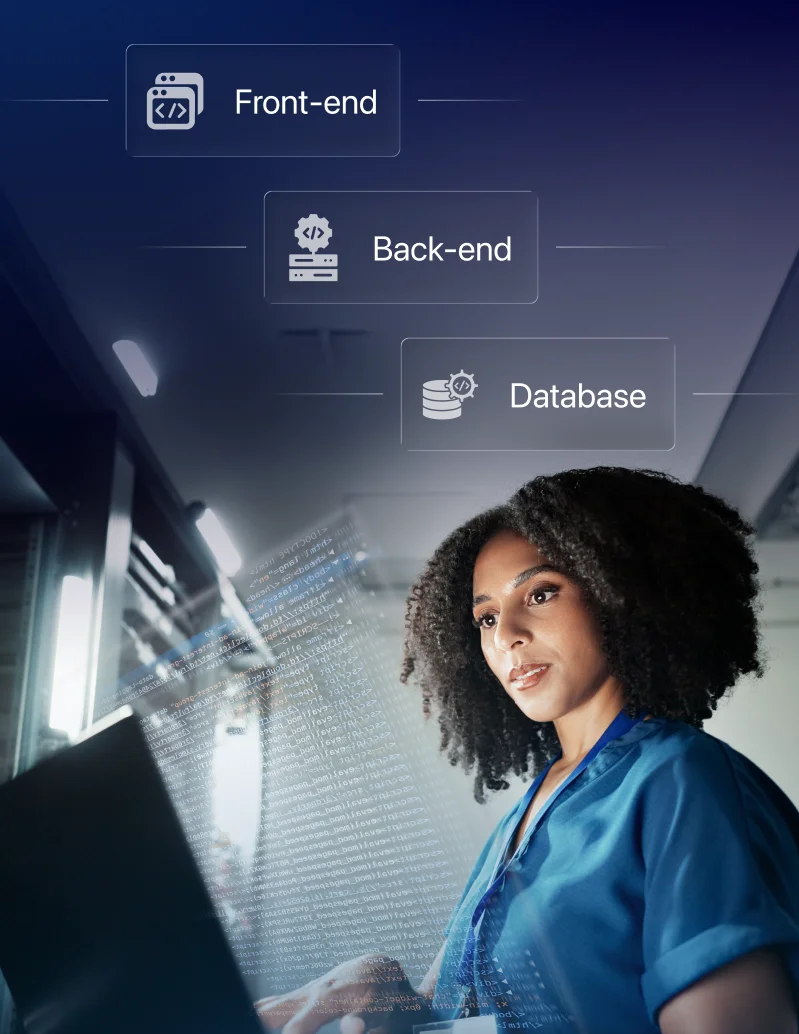
As systems evolve, frontend, backend, and database layers can drift out of sync. Being one of the best code refactoring companies, we review how these layers communicate and ensure responsibilities are clearly defined across the stack.
We simplify overlapping logic, clarify data ownership, and align structural patterns across layers to ensure they follow a coherent structure. This creates a more cohesive architecture that development teams can confidently work within.
Our software refactoring services offer a strategic, structured process using manual testing and automated scripts to validate software functionality, reliability, performance, and security. Our team defines testing standards, increases coverage, and integrates automated validation into your development lifecycle.
This includes unit testing, integration testing, and regression validation. We also document testing processes and verify that quality checks are embedded into ongoing development workflows. As a result, testing becomes part of the process, not an afterthought.
Refactoring is rarely a one-time effort. As a top-rated code refactoring agency, even after initial improvements, we continue reviewing code quality, monitoring structural consistency, and supporting internal teams as the system evolves.
We provide periodic audits, structured cleanups, and guidance on maintaining development standards. This ensures your codebase stays organized and prevents technical debt as new features and updates are introduced.
We systematically identify areas where temporary fixes, outdated logic, or inconsistent patterns have accumulated over time, which leads to higher maintenance costs and efforts. Our team prioritizes high-impact modules and optimizes them into clean, efficient, and modern code to reduce future maintenance costs and improve development velocity.
Instead of surface-level fixes, we replace unstable logic with well-structured implementations and reinforce consistent development practices. Our software refactoring services offer a cleaner foundation that supports disciplined engineering over time.

Expert Strategic Guidance And Full-Stack Model Deployment
Code refactoring is necessary when your code becomes hard to maintain, slow, or difficult to understand. Small updates feel risky, releases take longer than expected, and every change seems to trigger something unexpected elsewhere in the system.
If technical discussions increasingly revolve around “workarounds” rather than proper fixes, or if your team hesitates before touching certain parts of the code, it’s usually not a people problem; it's a structural one. That hesitation often signals deeper issues within the codebase, and your team should opt for application refactoring services.
Stop letting messy code hold your business back. Avail our software refactoring services now to stay competitive!
When your application’s performance becomes slow, inconsistent, or unable to handle increased loads, it signals your code needs refactoring to resolve performance bottlenecks, optimize algorithms, and reduce resource consumption.
If adding a simple feature requires digging through multiple files just to understand how things connect, the codebase may be overly complex. Teams often notice this when routine updates start consuming disproportionate time.
When fixing one issue unintentionally breaks something else, it’s usually a structural problem. A growing number of regression bugs suggests that components are tightly coupled or poorly isolated, which makes stability harder to maintain over time.
When scaling feels expensive and unpredictable rather than planned and controlled, it’s typically a sign that the internal architecture needs restructuring. Poorly optimized logic and duplicated processes often drive unnecessary resource consumption.
If new developers struggle to understand the code even after documentation reviews, the system may lack clarity. Long onboarding cycles often point to inconsistent patterns and overly complex logic. Clean structure reduces this dependency.
When new features require rewriting large portions of existing code or avoiding certain modules altogether, it’s a clear indication that modernization and structural refactoring are overdue. Over time, tightly connected components make innovation difficult.
Client Success Stories

Idea Maker has done an amazing job of delivering and responding to our needs.

The team was very responsive and easy to work with. They are professional, talented, and experienced team. They were able to meet all our requirements.

Idea Maker is distinguished for their personalized collaboration and white glove services. The team is dependable and reliable, sticking to the project's plan, offering feedback, and pushing back on the right things.

The way they understand the requirements we present to them is fairly solid. Both in terms of bringing their own interpretation in nailing the requirements and their design sense. By the time we launched, I had gotten significantly more value from our collaboration than what we had discussed in the original specs.

This is a boutique development firm where the Founder is directly involved with the project and the primary contact. This is unlike many development firms where you are simply handed off to developers that are not stakeholders. This is an important distinction that results in much better project accountability.

I have never had a site like this built before. I felt that Idea Maker and Tom had built numerous sites like this, and they were pros.

Idea Maker's portfolio is what drew us in. Their design style was in alignment with what we were after. We had initial consultations with 3 companies that we had narrowed it down to. Once we had our initial meeting with Tom at Idea Maker we knew we had the right choice to make. Their communication style works well for us.

Their customer service is excellent — they’re incredibly accessible and available, which I appreciate. Furthermore, they have enough experience and bandwidth to fulfill all my needs. They’re one of the best vendors I’ve worked with.
Our Case Studies
Feature development and legacy code upgrades for a solar panel IoT monitoring system

Transformed website into a SaaS application for monitoring school cleanliness, with features for inspector feedback and a super user dashboard

Rescued and completed abandoned website, fixing errors and adding new features to ensure a fully functional site for chemical spill solutions
Tech Enabled
Through our 10+ years of experience, we carefully choose the right tech stack, frameworks, and APIs based on system criticality, scalability needs, and long-term maintainability. We leverage modern technologies that support secure, high-performing, and compliant healthcare and enterprise-grade platforms.


How It Works
At Idea Maker, our refactoring process is structured, phased, and transparent. We move step by step by first understanding your system, then prioritizing structural issues, and gradually implementing improvements. Every stage is documented, reviewed with stakeholders, and aligned with business priorities for clarity and control throughout the engagement.
Partner with us today and make your codebase developer-friendly. Reduce onboarding time and internal friction!
We begin with a hands-on review of your application’s structure, modules, integrations, and development workflows. Our engineers map dependencies, identify fragile areas, and examine how changes are currently introduced into the system to create a clear technical snapshot before any modifications are made.

Once we identify structural gaps, we categorize them based on impact and risk. We separate cosmetic improvements from critical issues that are affecting stability, scalability, or maintainability. Before refactoring code, we focus first on high-impact areas while building a clear and realistic refactoring roadmap.
We define a structured plan outlining what will be improved, in what order, using which refactoring tools, and how changes will be introduced safely. Rather than rewriting everything, we break the work into controlled phases that preserve business logic while improving organization and internal clarity.
Refactoring is implemented gradually, module by module. We improve structure, remove redundancies, and reorganize logic in small, manageable segments to avoid disruption. Our team also leverages AI code refactoring to provide you with cleaner code in less time and cost. This controlled approach for refactoring code maintains system continuity while steadily improving the codebase.
At each stage, we validate changes through structured testing and internal reviews. We verify that existing functionality remains intact and that improvements behave as intended. Quality checks are embedded throughout the process to maintain stability.
After improvements are validated, we coordinate structured deployment into your production environment. We monitor system behavior closely following release, review logs and performance indicators, and address any unexpected issues promptly for a smooth transition.
Diverse Sectors, Custom Solutions
At Idea Maker, our software refactoring services help businesses across industries clean, restructure, and modernize their software. Every sector has unique technical challenges, legacy systems, and growth constraints, and our code refactoring services are designed to make applications more maintainable, scalable, and reliable for long-term business success.


ERP systems, enterprise platforms, internal business applications, operational software, and large-scale data ecosystems.

Multi-tenant SaaS refactoring, cloud-native applications, subscription systems, APIs, and rapidly evolving software ecosystems.

Clinical systems, patient management software, healthcare data platforms, telemedicine applications, and compliance-focused digital solutions.
Core banking platforms, payment systems, risk and compliance software, financial data platforms, and transaction-heavy applications.
Commerce platforms, inventory management, order processing systems, omnichannel retail technology, and customer experience applications.
Citizen service portals, legacy government systems, regulatory software, data management platforms, and public infrastructure applications.
Fleet management software, supply chain platforms, delivery tracking systems, and operational efficiency applications.
Streaming platforms, content management systems, interactive platforms, and high-performance gaming software.
Learning management systems, student information platforms, and digital course delivery applications.
When refactoring is done properly, the shift is highly noticeable. The system feels lighter to work in. Changes don’t create anxiety. Your team stops working around the software and starts working with it. It’s less about “improvement” as a concept and more about removing daily friction.
Turn Legacy Systems Into Assets. Refactor complex systems with minimal disruption and maximum impact!
Over time, even solid systems slow down. Small inefficiencies add up to extra queries and duplicated logic there. Once those are cleaned up, performance stabilizes, and your team doesn’t have to chase random slowdowns anymore. The application behaves consistently, even during heavier usage.
A messy codebase quietly drains budget and does more and more in the long run. Developers spend hours tracing issues that shouldn’t exist. Support teams deal with recurring bugs that never fully disappear. When structure improves, those repeated problems shrink. Less firefighting. Fewer urgent fixes. More predictable engineering effort.
When code is clear, adding features stops feeling risky. Developers don’t need to tiptoe around certain modules or worry about breaking unrelated areas. They understand the structure and can move with confidence. That confidence alone shortens development cycles.
Scaling shouldn’t feel like gambling. In a well-structured system, growth doesn’t expose hidden weaknesses. The architecture supports expansion instead of resisting it. Stability becomes part of how the system is built, not something constantly patched.
Most production incidents don’t come out of nowhere; they come from fragile connections inside the code. When those connections are cleaned up and responsibilities are clearly separated, problems stay isolated. One issue doesn’t take down everything else.
Developers know when a system is hard to work with. They hesitate before making changes. They double-check everything. In a clean codebase, that tension disappears. People work faster, onboard quicker, and spend their energy in building, not untangling.

At Idea Maker, we offer access to a team of seasoned code optimization experts with 8+ years of hands-on experience across multiple industries. Our developers have worked on complex projects ranging from enterprise platforms to SaaS refactoring, healthcare systems, and high-traffic eCommerce solutions. Their depth of experience across various refactoring tools and strategies allows them to quickly understand your system, identify bottlenecks, and implement structural improvements without disrupting existing functionality.
Our experts follow a disciplined, collaborative approach for refactoring code. They work closely with your internal teams to ensure alignment with business priorities and product roadmaps. At Idea Maker, we cultivate a culture of transparency, continuous learning, knowledge sharing, and adherence to code refactoring best practices. Every improvement is carefully planned, tested, and documented for long-term maintainability, technical clarity, and measurable impact on performance and scalability.
Bring in experienced developers to restructure and optimize your software. Hire Our Code Refactoring Experts!
Trust. Strategy. Value. Results.
At Idea Maker, your code refactoring is handled by our 30+ in-house engineers with 8+ years of experience working on live production systems. We don’t outsource or experiment on your core platform. Every structural improvement is planned, reviewed, and executed with full accountability and technical ownership.
Unlock Faster Development Cycles. Partner with engineers who make adding features predictable and safe!

Our team has worked across complex multi-layer applications, high-traffic platforms, and long-running enterprise systems. We understand how architectural shortcuts compound over time and how to untangle tightly connected components without destabilizing the application. That’s why we have hands-on expertise in improving structure while preserving operational continuity.

We regularly work with platforms that have evolved over many years, often built by multiple teams with inconsistent standards. Instead of rewriting from scratch, we carefully analyze legacy logic, protect what still works, and methodically restructure fragile areas using modern refactoring tools and strategies without interrupting daily operations.

We do not recommend full rewrites unless necessary. Our software refactoring services offer a phased and controlled approach to improve specific modules while keeping the broader system stable. This reduces financial risk and avoids downtime, so that your product roadmap continues moving forward during the refactoring process.

At Idea Maker, every structural change goes through disciplined validation. We review functionality before and after improvements to preserve existing functionality, speed, and stability. Our refactoring process is supported by structured testing practices, so improvements do not introduce regressions or hidden side effects into your production environment.

We prioritize refactoring decisions based on business impact, not engineering preference. We focus on areas that affect release speed, scalability costs, and operational risk first. We aim to ensure technical improvements directly support product delivery timelines and long-term growth objectives.

Our team documents all structural changes clearly and maintains open communication throughout the engagement. Your internal team understands what was improved, why it was improved, and how to work within the updated codebase. Nothing is hidden, and no changes are made without visibility.
FAQs

Code refactoring means improving the internal structure of your software without changing what it does. It reorganizes messy logic, removes duplication, and simplifies complex areas so the system is easier to maintain. Optimization focuses on cleaning up inefficiencies that affect performance, scalability, and long-term stability.
Not when it’s done properly. Well-performed refactoring keeps business logic intact while improving the structure around it. Every change is reviewed and validated before release.
We work in controlled phases instead of making sweeping changes. Improvements are introduced module by module, tested carefully, and deployed in planned releases. Our incremental approach for refactoring code reduces disruption and allows us to monitor system behavior at every step.
Yes, and in most cases, it should be. Full rewrites are expensive and risky. We focus on improving targeted areas of the system while keeping the core application running to protect your investment and avoid unnecessary downtime.
We start by identifying areas causing the most friction, like frequent bugs, slow performance, scaling limitations, or development bottlenecks. From there, we rank improvements based on impact and risk, addressing high-value structural issues first.
It depends on the size and complexity of the system. Smaller modules may take weeks, while broader structural improvements can span several months. We define clear phases and timelines upfront so expectations are aligned from the beginning.
Yes. Refactoring isn’t always a one-time effort. Our application refactoring services offer ongoing refactoring code reviews, structural audits, and guidance to help your team maintain clean standards as the product evolves, so that improvements remain intact as new features are added.

Idea Maker © 2026 ● All Rights Reserved

