Benefits of Mobile Apps for Businesses in 2026
You are already spending on ads, SEO, and content to attract users. But once they leave your website, you lose them. There is no direct way to bring them back unless you spend again. Even when intent is high, it often doesn’t convert. Around 70% of shopping carts are abandoned, meaning most of that effort never translates into revenue. That is where growth starts to go down. The issue is not traffic; it is what happens after the first interaction.
Instead of relying on users to return on their own, a mobile app keeps you connected, guides actions at the right moment, and builds repeat usage into the experience. That is where the benefits of mobile apps start to show, in how revenue grows, how engagement builds, and how customers stay with your business.
- Benefits of mobile apps take your business from one-time visits to continuous engagement, keeping your brand visible and bringing users back without relying on ads or search.
- Compared to mobile websites, apps offer faster access, smoother user flows, offline support, and higher conversion potential.
- Features like push notifications, personalization, and loyalty programs help increase retention and repeat usage.
- Apps also improve internal operations by reducing manual work. This improves coordination and gives real-time visibility across teams.
- Businesses that adopt mobile apps early build stronger customer relationships and gain an advantage that becomes harder for competitors to match later.
Mobile Apps Are Growing Faster Than Most Businesses Realize
Mobile usage has changed significantly over the past decade. In January 2009, desktop devices accounted for 99.3% of global web traffic. By July 2025, that number dropped to 39.5%, while mobile overtook it with 60.5% of global web traffic.
You’ll see that mobile users spend close to 90% of their time inside apps. This clearly shows that users prefer apps over browsers. That means engagement, retention, and conversions increasingly happen within apps, not on websites.
This shift directly impacts revenue. Global mobile commerce sales are expected to reach about $2.5 trillion in 2025, accounting for 63% of total eCommerce. Businesses that invest in mobile apps are positioning themselves where transactions already happen, while others depend on channels with lower control and weaker retention.
This is the “why now” moment. The window to act is narrowing. Competitors who have already built apps are accumulating behavioural data, strengthening retention, and reaching users directly without paying for every interaction. Businesses still relying on websites and paid channels are funding relationships they don't own.
How Apps Compare to Mobile Websites
A responsive website gives access, but it resets the experience on every visit. Users need to log in again, re-enter data, and repeat steps across sessions. This creates friction in multi-step flows such as checkout, bookings, or onboarding, where most drop-offs happen.
A mobile app removes that reset. You persist authentication, store user state, and allow users to continue from where they left off. You also use device-level capabilities such as local storage, background syncing, and cached data to reduce load times and maintain continuity even with unstable connections.
This changes how users complete actions. Instead of restarting flows, they continue them with persisted state and session continuity. That reduces funnel abandonment at key stages, improves conversion rate, increases task completion rate, and lifts revenue per session. At the same time, it lowers customer acquisition cost (CAC) by converting more of the traffic you already pay for and improves customer lifetime value (LTV) through higher repeat interaction.
What Customers Now Expect From a Business App
User expectations now come from high-performing apps. Your users expect your product to remember context, reduce effort, and guide them toward completion.
They expect persistent sessions, saved preferences, and actions that carry across devices and sessions. They also expect relevance, where content, recommendations, and actions reflect what they already showed intent for.
When this is missing, the failure is very common. Users do not retry flows that feel repetitive or slow. They switch to alternatives that reduce effort.
From a business standpoint, this raises the baseline. You need to minimize repeated input, shorten the time to action, and maintain continuity across interactions. When you meet that standard, you retain more users and convert more of the demand you already generate.
Benefits of Mobile Apps for Businesses
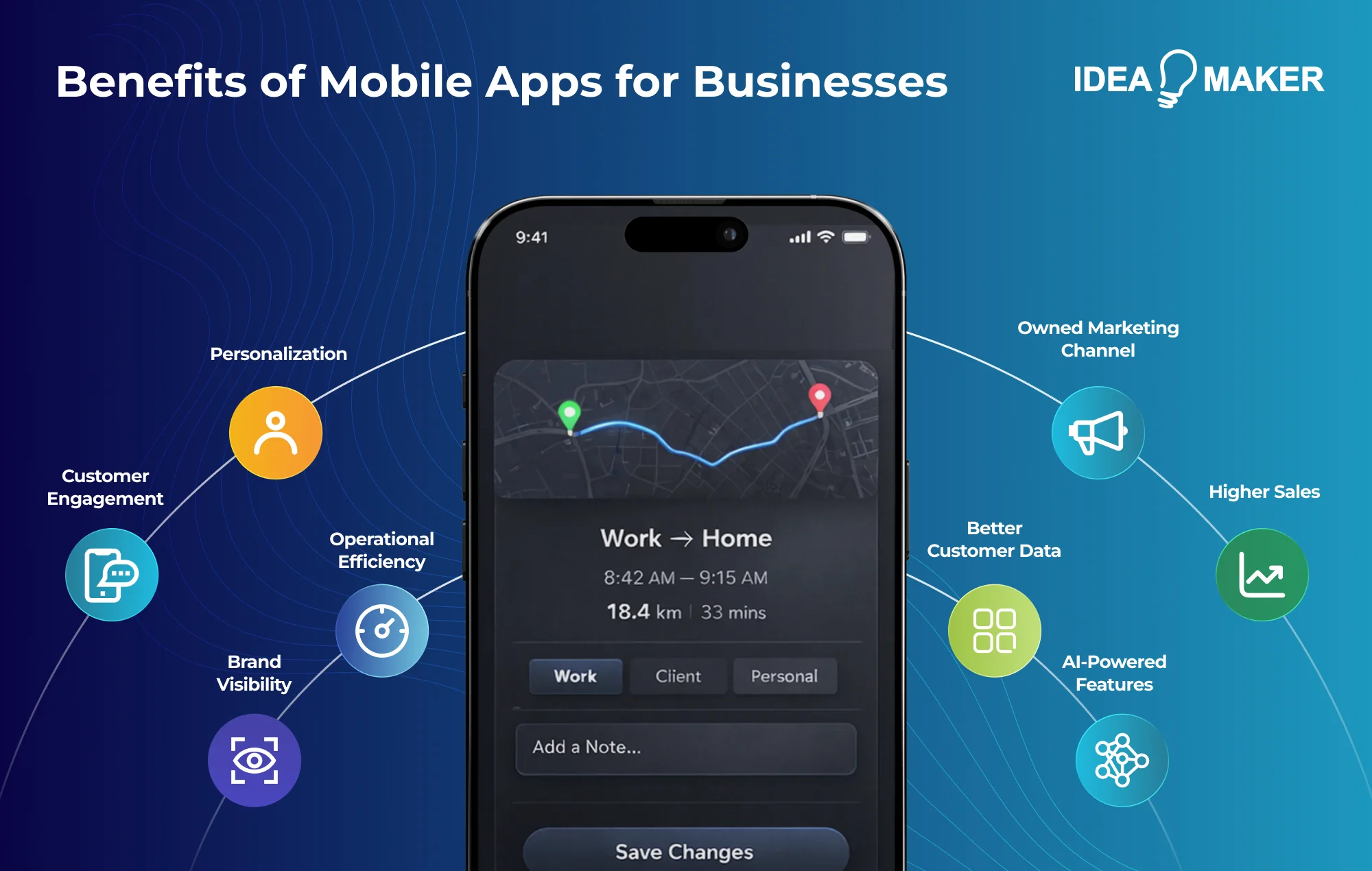
These are the main benefits of mobile apps and how they make a measurable difference in your business.
Mobile Apps Keep Customers Engaged Long After the First Visit
When users leave your website, you lose control over what happens next. You rely on search, ads, or memory to bring them back, and in most cases, they don’t return.
A mobile app changes this. You place your product directly on the user’s home screen, keeping your brand visible every day. That visibility increases the chances of return without additional effort.
More importantly, you control re-engagement. You can track user behavior and define triggers based on where users drop off.
Take an eCommerce flow. When users browse, add items to the cart, and leave before checkout, you get a good trigger point. Around 88% of shopping sessions end without a purchase, so most intent gets lost at this stage.
You can act on that immediately. Send a notification to remind them about the cart. If they don’t add items, you can show price drops or similar products. If they become inactive, you can bring them back with a limited-time offer.
You see the impact in your metrics. You get higher return frequency, longer sessions, and deeper engagement because users move across steps without interruption. From a business view:
- Increase return visits without extra acquisition spend
- Extend session duration through faster access
- Drive deeper engagement across features
You move from one-time visits to a continuous interaction loop where users return, engage, and build familiarity with your product.
How to Use Push Notifications Effectively
You use push notifications as a direct channel that does not depend on ads or email. You reach users instantly, even when they are not inside your app.
At the same time, users receive many notifications every day. If your message lacks relevance or timing, users ignore it or turn it off.
To make this work, focus on a few key practices:
- Trigger messages based on user actions, not generic broadcasts
- Keep frequency low and scale only when engagement supports it
- Send messages at the right time based on user activity
You also need to measure what matters. Track what users do after they tap, how often they return, and how deep they go in the app.
When you use this correctly, you turn notifications into a reliable way to bring users back at the right moment.
How In-App Loyalty Programs Reduce Churn
You lose users when they don’t build any value inside your product. Loyalty programs solve this by giving users something to accumulate.
Each interaction adds progress. That changes behavior from occasional use to regular engagement.
You can keep this simple and effective by focusing on:
- Reward actions with points or benefits
- Use tiers to unlock better rewards over time
- Show clear progress through milestones or challenges
As users build value, they think twice before leaving because they lose what they have earned.
You can strengthen this further inside your app. Use membership cards, wallet integrations, and reward tracking to make redemption easy. Send reminders about expiring rewards or new benefits to bring users back.
Over time, you create a compounding effect. Users return not only to complete tasks but also to maintain and grow what they have already earned.
This reduces churn, increases repeat usage, and improves customer lifetime value by making retention part of your product experience.
Mobile Apps Deliver Personalization That Websites Cannot Match
If you look at how personalization works on most websites, it’s still quite basic. You might show a recommended product or change a banner, but it rarely goes beyond that.
A mobile app gives a completely different level of visibility into user behaviour. Your apps collect behavioural data that enables truly individualized experiences. You are not only tracking visits. You see what someone browses, what they ignore, how far they go in a flow, and where they drop off. That builds a very clear picture of intent.
That is where deep behavioural personalization comes in. Instead of static rules, the app can adjust in real time. Product recommendations change based on browsing patterns. Content feeds get updated based on what users engage with. Offers can be location-based and even tied to milestones like anniversaries or past activity.
Here at Idea Maker, we see this come up often when clients talk to us about building a business mobile application. They usually want features like product recommendations, custom content feeds, location-based offers, and even birthday rewards and milestone-based messages.
After a while, this is no longer treated as separate features. It becomes part of how the app naturally operates. As the app learns from user behaviour, the experience updates itself. If someone keeps browsing a certain category, those products begin to appear more often. Returning users see different offers compared to first-time users. Even things like location, past purchases, and timing start to influence what each person sees.
Around 71% of consumers now expect brands to deliver personalized interactions, which means understanding their needs is no longer optional. That expectation is much harder to meet on the web, where sessions are shorter, and data often resets between visits.
| What changes | Mobile app | Website |
| User data | Continuous across sessions | Limited to session/cookies |
| Personalization | Based on behavior and history | Mostly rule-based |
| Context | Uses location, device data | Very limited |
| Experience | Feels tailored per user | Same for most users |
Your App Is a Marketing Channel You Fully Own
Most channels you use come with trade-offs. Social platforms control reach through algorithms. Email depends on opens. Paid media only works while you keep spending.
A mobile app works differently. Once installed, it gives you direct access to your users without depending on third-party platforms to stay visible. That makes it one of the few channels you fully control.
Inside the app, you can reach users through push notifications, in-app messages, and segmented campaigns. The advantage is not only in having these tools, but in owning the channel itself. You control when messages go out, who sees them, and how they connect to user behaviour inside the product.
That changes the economics of communication. Instead of paying repeatedly to win back attention, you maintain an owned channel that supports retention, re-engagement, and conversion within the product itself.
Mobile Apps Directly Increase Sales and Order Value
When your users decide to buy, any delay or extra step in checkout can lead to drop-offs. Users slow down when they have to enter payment details, fill forms, and repeat steps. Mobile apps reduce this by securely storing user information and enabling faster checkout, which shortens the path from intent to purchase.
Features such as one-touch checkout, saved payment details, and integrations with Apple Pay or Google Pay enable purchases to be completed in seconds rather than minutes.
Faster browsing and persistent carts also have an impact. Users can leave and return without losing their progress, reducing drop-offs during checkout. Wishlists and saved items keep purchase intent alive, even if the decision is made later.
Mobile commerce data already reflects this behaviour. A significant share of eCommerce transactions now comes from mobile devices, with data showing that mobile accounts for around 57% of global eCommerce sales.
At the same time, personalization and loyalty systems increase order value. Relevant product recommendations, exclusive in-app offers, and rewards tied to spending encourage users to add more before completing a purchase.
This is where the benefits of mobile apps for small businesses show up in actual revenue outcomes. Conversion improves, average order value increases, and revenue grows without increasing acquisition costs. It also connects with the benefits of mobile apps for users, where speed and convenience directly influence buying behaviour.
Mobile Apps Strengthen Brand Visibility Every Single Day
When someone installs your app, your brand is right in front of them every day. The home screen icon keeps your presence visible even when the app is not open. Unlike a website that relies on traffic, your brand remains visible without extra effort.
This creates a psychological advantage. Repeated exposure builds familiarity, and familiarity builds trust. Then users start associating your app with a specific need, increasing the likelihood of repeat use.
Inside the app, consistency matters as much. Design, navigation, and messaging reinforce your brand identity with every interaction. This level of control is difficult to maintain on the web, where sessions are shorter and less predictable.
App Store presence adds another layer of visibility. With proper App Store Optimization (ASO), your app becomes discoverable beyond your existing audience:
- Ranking for category and keyword searches brings in new users without paid acquisition
- App listings act as a branded storefront with visuals, reviews, and positioning
- Ratings and reviews build social proof directly within the discovery process
- Visibility in “top charts” or recommendations increases brand exposure at scale
The app works as both a product and a brand touchpoint by helping your brand to be in the user’s daily routine.
Mobile Apps Improve Internal Operations, Not Just Customer Experience
When you think about mobile apps, it’s easy to focus only on customers. But a large part of the value comes from how your internal teams operate. Not all apps need to face customers. Many are built for internal use, such as field service apps, employee portals, workflow tools, or team collaboration apps.
Instead of relying on calls, spreadsheets, or constant follow-ups, your teams can handle tasks directly through the app. This matters even more in industries like logistics, construction, healthcare, and field services, where work happens across locations and timing affects everything.
In similar situations, internal apps make a strong impact:
- Data gets captured once and shared instantly instead of being entered multiple times
- Teams work from up-to-date information, which reduces errors from stale or duplicate data
- Tasks and updates are in one place, so work moves faster
- Managers get real-time visibility into field activity without chasing updates across calls or messages
Here at Idea Maker, we’ve seen companies reduce operational overhead by over 30% after moving key workflows into mobile apps.
The Difference Between Customer-Facing and Internal Business Apps
Customer-facing apps focus on users. They help with engagement, sales, and overall experience.
Internal business apps focus on teams. They help employees complete tasks faster, reduce errors, and manage operations more efficiently.
Most businesses need both. One drives growth, the other supports it.
Real World Examples of Operational Apps in Action
To understand the impact, look at where time and errors typically accumulate in your operations. Most inefficiencies stem from communication delays, repeated manual updates, and a lack of real-time visibility. Mobile apps address these exact gaps where work happens. For example:
- Delivery tracking apps help update routes and delivery status in real time, which improves coordination across logistics teams
- Inventory apps allow you to check and update stock instantly, reducing errors that usually come with manual records
- Scheduling apps help manage appointments, availability, and workload without constant back-and-forth
Each of these solves a specific bottleneck, but together they change how smoothly the business runs. That is where the actual benefits of mobile app development come through, not as a single feature, but as a consistent improvement in how operations are managed day to day.
Mobile Apps Give You Customer Data That Actually Drives Decisions
When you rely on a website, most of what you see is limited data. With a mobile app, you get a much more comprehensive picture of how people actually use your product. That changes how decisions get made.
- Feature usage shows which features of the app people use often and which ones they ignore. This helps you invest in the right features and avoid wasting resources on things that do not add value.
- Session paths show how users move from one step to another. You can see where they complete actions and where they get stuck. This helps refine flows, improve conversions, and remove friction in key journeys.
- In-app search queries reveal what users actively look for. This gives direct insight into demand, which helps with product planning, content strategy, and inventory decisions.
- Drop-off points show where users leave before completing an action. Fixing these points often leads to immediate improvements in conversion and retention.
This creates a continuous feedback loop. You launch features, observe behavior, and refine based on usage.
AI Features Are Making Business Apps Smarter in 2026
AI features have significantly changed what leading apps do by default, increasing the advantages of mobile apps for business. Predictive product recommendations, AI chatbots, intelligent search, dynamic UI personalization, and computer vision features like visual search or AR try-ons already influence how users discover, compare, and buy. That matters at the product level, but it also matters at the business level.
The mobile AI market reached $23.85 billion in 2025, which shows this is already an active investment category. In many cases, custom app development is what makes these AI features useful because the model needs to fit your workflows, data, and customer journey.
How AI Chatbots Handle Customer Support Around the Clock
With in-app AI chatbots in place, your support team no longer needs to handle every incoming request. Routine questions, basic troubleshooting, and guided actions can run through the chatbot without waiting for an agent. This reduces the number of manual tickets and shortens response times.
At the same time, support stays available even outside working hours. Customers get immediate answers, and your team focuses on more complex issues that actually need attention. That balance improves both efficiency and customer experience without increasing support costs.
How Predictive Personalization Increases Conversions
With predictive personalization, your app responds to how people actually behave inside it. Machine learning analyzes actions like browsing, clicks, and past interactions, then decides what to show next. That could be the right product, a relevant piece of content, or an offer that matches intent at that moment.
Instead of showing the same message to everyone, the experience adapts in real time. This keeps users engaged and increases the chances of conversion while they are still active.
Mobile Apps Give You a Competitive Edge in Underserved Industries
In many industries, there is a strong opportunity to improve how customers interact with your business through mobile apps where competitors haven't built apps yet. Sectors like local services, professional services, and niche B2B often rely on websites, calls, or manual coordination. Introducing an app to one of these business use case helps you to offer a faster, more organized way for customers to engage.
Moving early helps you set that experience. Booking, tracking, communication, and support can all happen in one place. What starts as added convenience quickly becomes the preferred way to interact. Competitors who continue with traditional methods begin to feel slower and less efficient in comparison.
This is where the advantage builds with time. As customers get used to that level of speed and ease, they are less likely to switch. It becomes part of how they expect the service to work.
Acting early lets you define the standard in your space. That is one of the key benefits of mobile apps, where the advantage comes from leading the experience before others follow.
Different Industries Benefit From Mobile Apps in Different Ways
The value of a mobile app changes depending on how your business operates. The same features do not deliver the same outcomes across industries. What matters is how well the app solves the specific bottlenecks in your workflow, customer journey, or service delivery model.
Retail and eCommerce
In retail, most losses happen between intent and checkout. A mobile app lets you control that stage with faster checkout, persistent carts, and targeted re-engagement. It also helps you increase order value by showing the right products at the right moment instead of relying on generic promotions.
Healthcare and Wellness
A mobile app helps you manage patient flow, reduce no-shows, and keep communication consistent. That directly improves operational efficiency while also improving patient experience.
Logistics and Field Services
In logistics, delays often come from a lack of real-time updates. A mobile app gives your teams a shared system to track tasks, update status, and manage routes as work happens. This reduces back-and-forth communication and improves execution speed during operations.
Fintech and Professional Services
In finance and professional services, clients expect quick access and good communication. A mobile app lets you deliver updates, documents, and services without delays. It also helps you maintain consistency across interactions, which strengthens trust with clients.
How to Know If Your Business Is Ready for a Mobile App
The decision to build an app should come from actual usage patterns. If customers return frequently, interact multiple times per week, or rely on your service regularly, a mobile app is likely the right investment.
You should also look at how users interact today. If key actions repeat, such as bookings, orders, or updates, moving those into an app improves efficiency. If most interactions are one-time or infrequent, a responsive website may be enough for now.
A few signs help validate the decision:
- High return visit frequency or repeat usage
- Strong engagement with specific features or actions
- Revenue tied to repeat interactions
- Opportunity to re-engage users through notifications
To understand whether an app will deliver ROI, tracking a few key metrics is worth paying attention to:
- Engagement rate - shows how actively users interact with your app, which indicates whether the app is delivering value or being ignored
- Push notification CTR - shows you how many users act on your messages. This helps you understand if your re-engagement strategy is working
- App-driven revenue - measures how much revenue comes directly through the app, which helps justify ROI and future investment
- Session frequency - shows how often users return. This gives a clear sign of habit formation and long-term retention
What to Think About Before You Build
Before starting development, three questions are useful to decide whether the app will succeed or struggle.
First, what is the core use case?
The app should solve a specific, high-frequency problem that already exists in your business. This could be repeat purchases, bookings, internal workflows, or customer communication. When the use case is clearly defined, it becomes easier to scope features, guide development decisions, and avoid building things that don't serve a real business need.
Second, what does success look like after 12 months?
Success should be defined in measurable terms. This might include repeat usage, contribution to revenue, reduction in manual effort, or improved customer retention. Without a proper outcome, it becomes difficult to assess whether the app is performing or where it needs improvement.
Third, who owns iteration after launch?
An app needs ongoing updates based on usage patterns, feedback, and changing business needs. Without a named owner responsible for the roadmap, post-launch updates stall, bugs go unaddressed, and the app gradually falls behind user expectations.
How to Choose the Right Type of App for Your Business
Before building anything, the choice of app type directly affects the benefits of an app for your business, such as cost, performance, and long-term flexibility. There is no single right option. It depends on how your business operates and what the app needs to handle.
| App Type | When It Fits | Budget Impact | Performance Level | Target Platform | Timeline | Trade-offs |
| Native (iOS/Android) | High performance, complex features, heavy user interaction | High upfront investment | Very high | Platform-specific (iOS or Android) | Longer development time | Higher cost, separate builds |
| Cross-platform (React Native, Flutter) | Faster development across platforms | Moderate | Good (with some limits) | Both iOS and Android | Faster to launch | Some limitations in performance and customization |
| Progressive Web App (PWA) | Simple use cases, web-first approach | Low | Moderate | Works across devices via browser | Fastest to deploy | Limited access to device capabilities |
At this point, it’s less about picking a type of app and more about getting the overall direction right. The choice only works if it matches how the business actually runs and where it’s heading. Otherwise, even a well-built app won’t deliver much.
That’s usually where you see the difference, not only in how you build the app, but also in how you plan and improve it later. That’s what we’ll get into next with how Idea Maker approaches building apps that actually deliver results.
How Idea Maker Helps Businesses Build Apps That Deliver Results
We at Idea Maker are a US-based custom mobile app development agency working with startups through to enterprise businesses. We bring full-spectrum capability across iOS, Android, cross-platform development, and AI integration.
Our expertise covers the entire lifecycle, from strategy and planning to design, development, launch, and post-launch maintenance. With 250+ successful projects delivered and consistent 5-star ratings on Clutch and Google, we have built a strong track record across industries.
We follow an Agile development process with transparent communication at every stage, so you always know how the project is progressing.
If you’re exploring a mobile app for your business, you can book a free consultation to discuss the right approach.
Final Thoughts on the Benefits of Mobile Apps for Businesses
The gap between businesses that invest in mobile apps and those that do not is widening. Mobile is already the dominant channel, accounting for over 60% of internet traffic.
As more transactions, interactions, and daily usage come through mobile, businesses without a strong app presence fall behind in both reach and experience.
If you are considering this direction, focus on what actually moves the needle:
- Identify one high-impact use case instead of building everything at once
- Define success metrics before starting development
- Plan how the app will evolve after launch, not only how it will launch
- Align the app with both customer experience and internal workflows
Customer-facing growth and internal efficiency gains work together when you build the app with intent.
Looking ahead, AI-powered apps are pushing this further. Businesses that adopt early will have a high advantage in how they operate and compete.
Frequently Asked Questions
What are the biggest benefits of having a mobile app for a small business?
There are a lot of benefits of having a mobile app for your business. A mobile app keeps customers engaged through repeat use, builds loyalty with rewards and ongoing interaction, and creates a direct marketing channel via push notifications.
How much does it cost to build a business mobile app?
A business mobile app can cost $15,000 to $500,000+. Complexity affects this price significantly. For example, an eCommerce app can cost around $40,000 to $250,000+, while a fintech app can cost as much as double that. Usually, Android apps are cheaper than iOS apps, while cross-platform apps are often cheaper than building separate native apps.
A consultation will help define the scope clearly and match the cost with the expected ROI.
How long does it take to develop a mobile app?
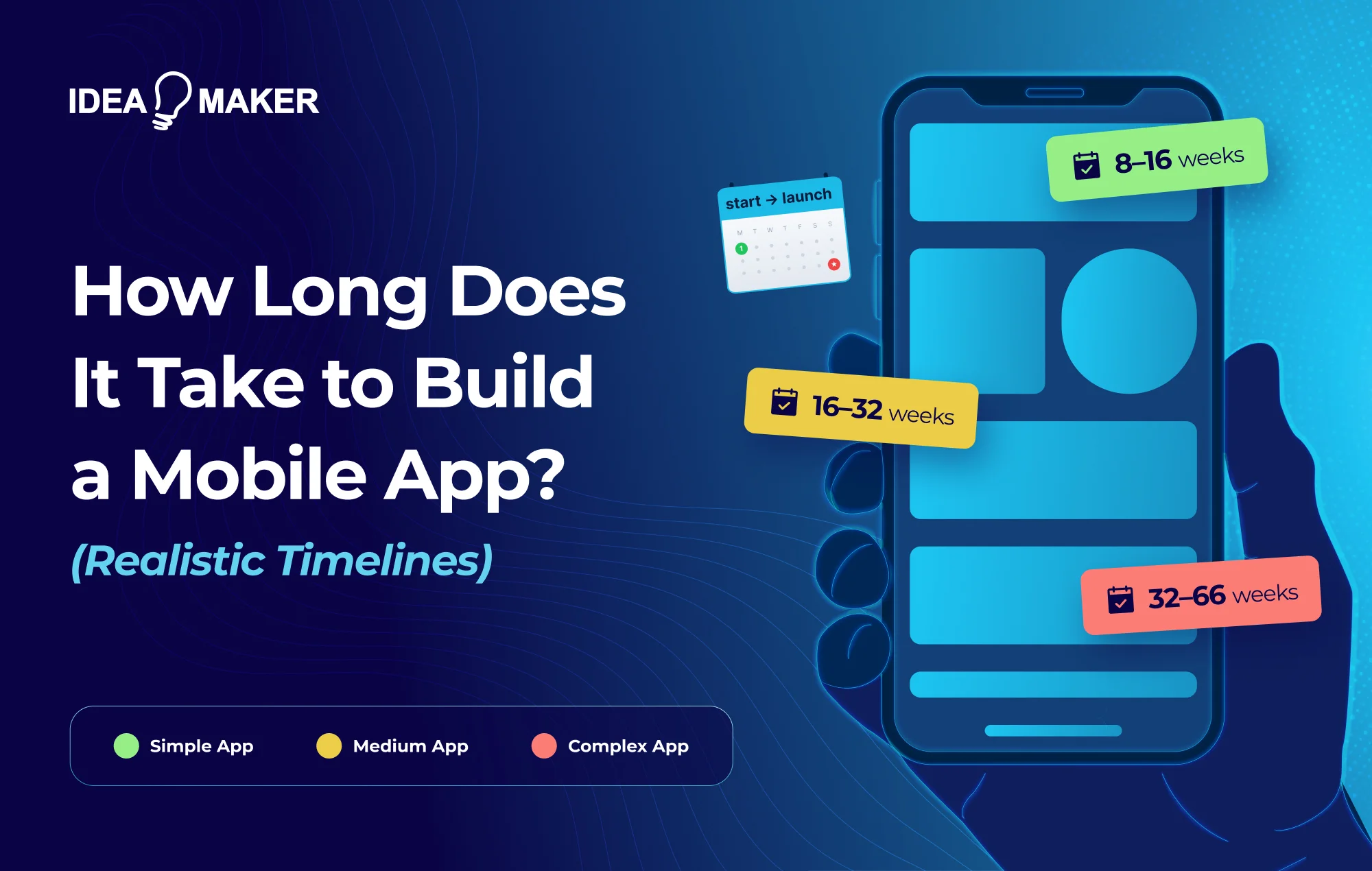
A standard app usually takes 3-6 months to build. Timeline depends on feature complexity, integrations, design scope, and how clearly the use case is defined upfront.
Should my business build a native app or a cross-platform app?
Native apps suit high performance and deeper device capabilities, while cross-platform works for faster, cost-efficient launches. The choice depends on budget, timeline, and how demanding the app experience is.
Can a mobile app replace my business website?
No, websites support discovery and reach, while apps focus on engagement and repeat usage. Apps add value through speed, personalization, and direct access that websites cannot replicate.
What features should a business mobile app include?
Key features include push notifications, user accounts, in-app payments, analytics, loyalty programs, and in-app support. These cover communication, transactions, personalization, and retention.
How do I measure the success of my business mobile app?
Track KPIs like DAU/MAU, retention rate, push notification CTR, app-driven revenue, session duration, and App Store ratings. These show engagement, growth, and overall business impact.
Which types of businesses benefit most from having a mobile app?
Businesses with frequent interactions benefit most, such as retail, e-commerce, healthcare, logistics, field services, and fintech. In these cases, the benefits of mobile apps show through repeat usage and operational efficiency.